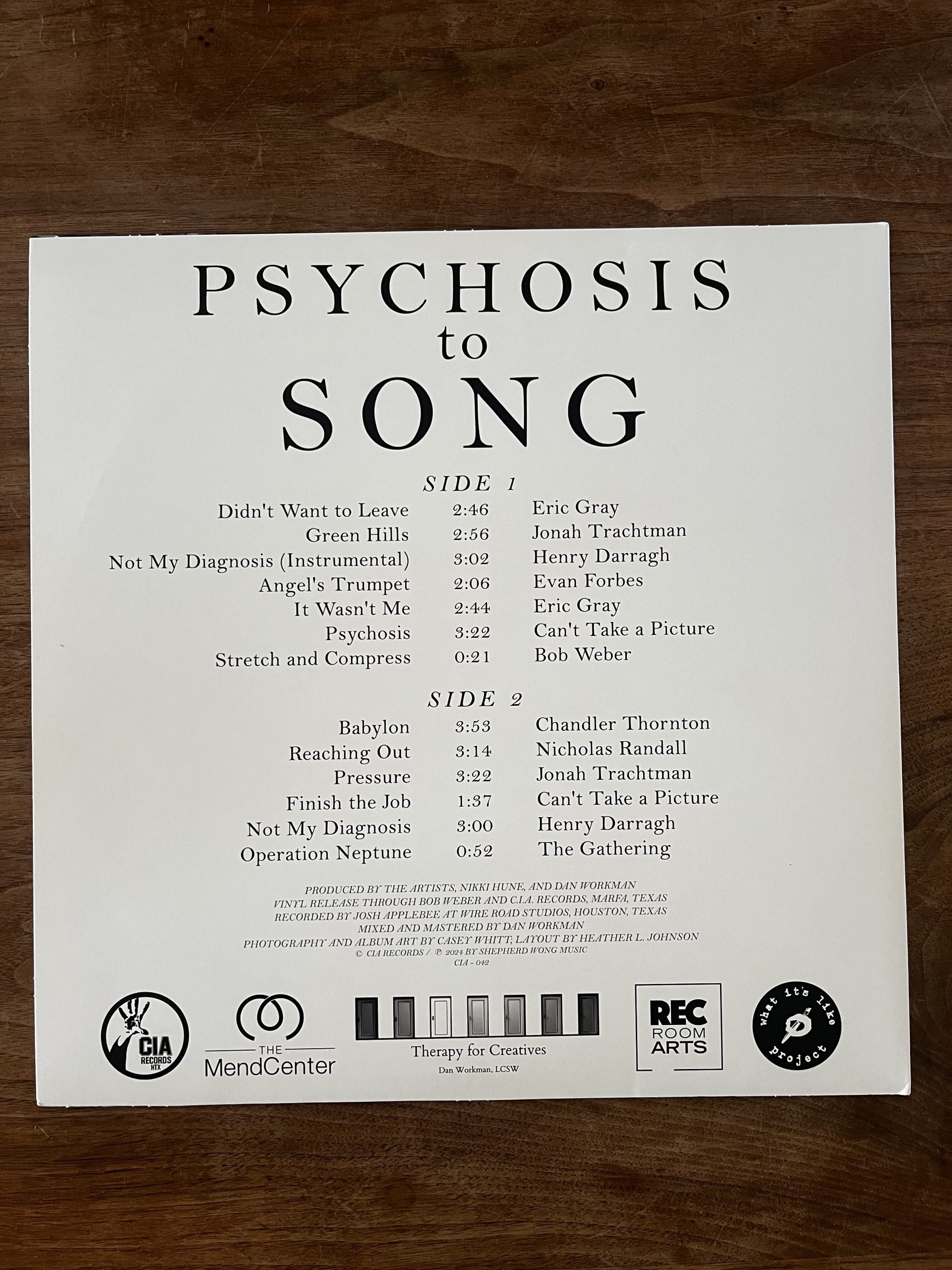
Psychosis to Song is another release that was sent to Upstarter from Bob Weber at CIA Records, the other being The Cat That Wouldn’t Die comp I wrote about a couple weeks ago. Bob was the drummer for one of my favorite early ‘80s bands Really Red, so it was a real treat to receive a package of cool stuff from him. If you aren’t familiar, remedy that immediately. I had a total blast listening to The Cat That Wouldn’t Die, and the release I’m writing about today I found to be maybe even more intriguing. Not only do I review music/zines as a side gig, but I’m also a psychiatric nurse by trade, and this comp is a collection of artists who all have significant mental illness. A very unexpected and welcome confluence of things I’m very passionate about.
Psychosis to Song is a project organized by Dr. Nikki Hune and Dr. Daniel Garcia in Houston, Texas regarding music therapy for psychiatric patients. It serves as the soundtrack to a 47-minute documentary called UnSound, which is about the positive impact of music in treating mental illness. With titles like “Not My Diagnosis”, “Psychosis”, and “Reaching Out”, it’s no secret what most of the subject matter is about. Having watched the documentary portion UnSound as well, I will say that although the thematic element of mental health is prevalent in most of these songs, each artist has a very different take on it. This is true both musically, as well as their own personal journey through the mental health system that they discuss in the documentary.
In my experience, music is massively important to almost every psych patient I’ve ever met. I can’t tell you how valuable being able to have patients check out tablets with headphones to listen to music is for someone struggling with mental illness. Not only that, but also playing instruments in group, karaoke, writing lyrics, you name it. Just thinking about my own experience in life, big moments and big feelings can always be connected to a song, often as a conduit to help validate and translate them. People diagnosed with bipolar or schizophrenia have a lot of big moments and big feelings, so it only makes sense as to why music can be so powerful for them.
I was initially a little worried that maybe Psychosis to Song and UnSound would suggest music alone as treatment for people with schizophrenia and bipolar, but thankfully that’s not what’s happening here. The patients interviewed also mostly substantiate the importance of medication as well. I’ve seen too many wonderful humans think they can stop taking their meds and get setback for years, so I was glad to hear that echoed by those involved. Any long term success story I’ve personally encountered contains a multitude of factors, but one of them is always medication for any significant mental health diagnosis.
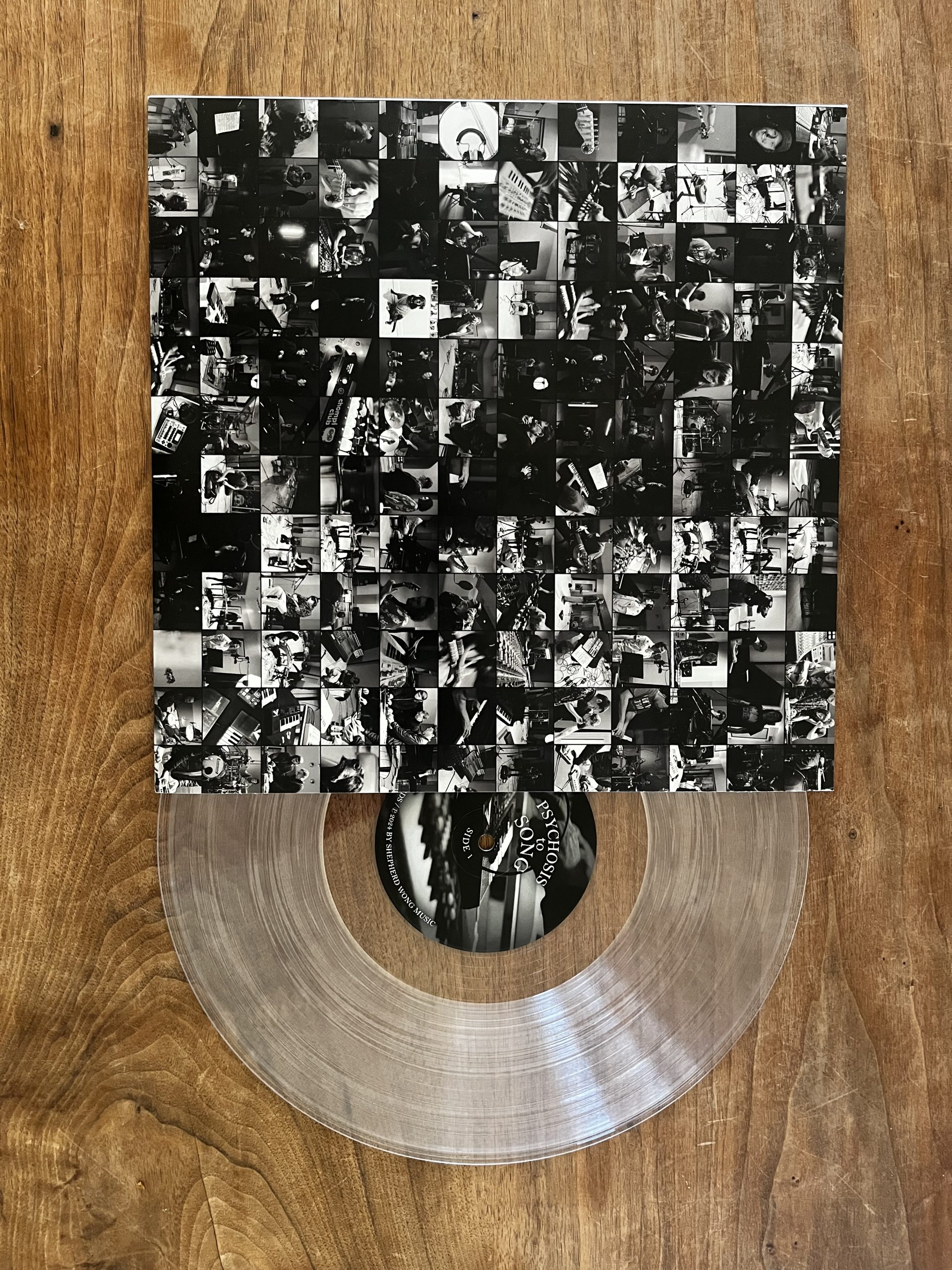
These songs range in style from indie rock (Eric Gray), hip hop (Chandler Thornton), jazz (Harry Darragh), to hardcore (Jonah Trachtman). It may seem like too much ground to cover in a single LP, but especially after watching UnSound and getting to know more about each individual’s story and approach, every minute of this LP is enjoyable. I was very impressed with the quality of music presented here, both in song craft and production. I’ve listened to it many, many times all the way through, and it’s been my go-to record to have on in the background while I’m puttering around the house. Running time comes in at about half an hour, and the jacket, layout, and clear vinyl all link up as a beautiful, cohesive product.
Everything about Psychosis to Song is appealing to me. I love that it gives the opportunity for people who have had the type of bad days you and I can only have nightmares about to release their art in such a cool and tactile way. It shines a light on the humanity of individuals who are often treated as pariahs in world, but in a very realistic way that doesn’t attempt to oversimplify the problem, or the solution. Although many of these songs delve into dark subject matter, the manner in which it has come together creates an album that just makes me feel good. I hope the people involved in making it were able to feel that as well.
Zach Nellis-Tessmer